1
single RGB imageREST3D starts from one casual image, not a dense scan or multi-view capture.
REST3D turns a single casual RGB image into a visually consistent and physically stable interactive 3D scene. REST3D focuses on simulation-ready digital assets, scene-tree reasoning, physics-constrained refinement, Isaac Gym simulation, and VR human-object interaction.
REST3D starts from one casual image, not a dense scan or multi-view capture.
Scene-tree construction, scene initialization/canonicalization, and physics-constrained optimization.
REST3D reports stable rates of 95.8% on Replica, 93.6% on ScanNet++, and 95.5% on the Custom set, with a 0.0% failure rate on all three.
REST3D demonstrates hand-based human-object interaction with Meta Quest Pro and Isaac Gym.
REST3D means REconstructing physically STable 3D scenes. The central idea is brutal and simple: a 3D scene that looks correct is not enough if objects float, intersect, explode under gravity, or collapse in a simulator. REST3D uses physical scene understanding and physics-constrained optimization so the reconstructed scene can behave like a usable digital asset.
They look for the REST3D paper, method diagram, baselines, datasets, metrics, ablations, limitations, BibTeX, and reproducibility notes.
They care about whether REST3D can convert a casual image into simulation-ready assets, stable layouts, VR demos, and interactive scenes.
They care about gravity, support relations, collision rate, stable rate, real-to-sim, Isaac Gym, object contact, and reliable manipulation scenes.
Searches for "REST3D" pull up several unrelated products and projects. To help visitors and search engines, we explicitly list what REST3D is NOT:
Anabolix Nutrition sells a product called REST3D ($69.95 sleep aid). This site has no affiliation with Anabolix Nutrition. REST3D refers to REconstructing Physically STable 3D scenes — an arXiv computer-vision paper by CMU authors.
Unity Play hosts a game named REST3D. This is unrelated to the REST3D research paper. REST3D.org focuses on single-image 3D scene reconstruction for simulation-ready assets.
A different GitHub repository called rest3d by ryanj provides a 3D client/server (MIT license), whose README references www.rest3d.org. This is a separate project. The official REST3D code repository is ShirleyMaxx/REST3D for the CMU paper on physically stable 3D scene reconstruction.
A WordPress blog ("3D for the REST of us") occupies rest3d.wordpress.com. REST3D.org is an independent research resource for the REST3D paper specifically.
Reconstructing physically stable 3D scenes from a single RGB image enables casual images to be converted into simulation-ready digital assets for applications such as immersive interaction and content creation. However, existing single-image reconstruction methods fall short in capturing the physical structure of a scene. As a result, they often produce geometrically plausible but physically inconsistent results, including object floating and penetration, which lead to unstable behavior in physics simulations. Image-conditioned scene generation methods improve physical plausibility but often rely on strong scene priors, yielding plausible yet inaccurate object arrangements that fail to match the input image. We propose REST3D, a single-image reconstruction framework that can REconstruct physically STable 3D scenes by integrating physical scene understanding with physics-constrained refinement. We first introduce an agentic physical scene understanding technique that constructs a scene-tree representation capturing object physical states and inter-object relationships from a gravity-support perspective, providing a structural prior for reconstruction. Leveraging this structure, we initialize the scene using image-to-3D models, followed by scene-tree-guided alignment and physics-constrained optimization to resolve physical violations while preserving visual consistency with the input image. Experiments show that our method significantly reduces physical errors and improves simulation stability on both synthetic and real-world datasets while maintaining strong reconstruction quality. We further demonstrate the reconstructed scenes in VR-based human-object interaction, showing their potential for immersive applications.
Visually plausible reconstructions can place objects above their support surfaces. REST3D targets support consistency.
Objects may overlap in 3D. Under physics, that collision can cause explosive separation and unstable behavior.
Image-conditioned scene generation can produce a physically plausible scene that does not match the input image. REST3D is designed to preserve visual consistency.
REST3D infers a hierarchical scene tree that captures objects, physical states, and inter-object spatial support relationships from a gravity-support perspective.
REST3D initializes object meshes using image-to-3D models, then uses the scene tree to correct global orientation and enforce coarse support constraints.
REST3D refines object poses through simulation-based optimization to reduce floating, penetration, drift, and instability while preserving the input image layout.
A REST3D scene tree is not a decorative hierarchy. It is the structural prior that says which object supports which object: table on ground, plant on table, poster attached to wall, radiator supported by ground-wall. This is the hidden skeleton that lets REST3D keep visual reconstruction and physical behavior aligned.
REST3D asks a vision-language model to identify distinct objects with descriptive attributes, not just coarse labels.
REST3D uses a segmentation agent and verifier loop to refine prompts and masks for each object instance.
REST3D infers support parents and support types from a gravity-aware perspective.
REST3D starts with raw image-to-3D output, then uses the scene tree to correct coarse orientation, enforce support, and produce a structured initial scene. Canonicalization alone is not enough; it improves stability but still needs the full REST3D physics-constrained optimization stage.
REST3D decomposes complex scenes according to the scene tree and optimizes smaller support groups so crowded scenes can converge more reliably.
REST3D then refines the whole scene to reduce collision, drift, velocity, and instability under simulated gravity.
The high-value promise of REST3D is practical conversion: one casual image becomes a 3D scene with object meshes and world-frame layout that can be imported into physics simulation. For users searching REST3D, the phrase simulation-ready digital assets should appear early and repeatedly because that is the real difference from ordinary image-to-3D reconstruction.
Explore the physics simulation of reconstructed scenes in Isaac Gym. Users can rotate by dragging, zoom by scrolling, inspect simulation, press Play, Reset, adjust Speed, and compare synchronized methods.
▶ Play · ↻ Reset · Speed · Run Simulation · Click or press Space · Loading scene...
Input Image · Ours · DigitalCousins · Gen3DSR · SceneGen · SAM3D.
Due to object interpenetration in baseline methods, applying gravity in a physics simulator can cause objects to explosively separate and become unstable. REST3D is built around the opposite expectation: reconstructed scenes should quickly settle into stable states.
Objects are placed sequentially for clarity and then simulated jointly. REST3D reconstructed scenes are simulation-ready and quickly settle into stable states.
REST3D includes an interactive VR system that reconstructs an immersive, physically grounded 3D scene from a single image, enabling users to naturally interact with stable virtual objects through hand-based interactions. The demo was recorded with Meta Quest Pro and played back at 3× speed.
The REST3D comparison focuses on physics simulation of reconstructed scenes in Isaac Gym. Existing methods struggle to balance reconstruction fidelity and physical stability, while REST3D produces stable, simulation-ready scenes that settle with only minor adjustments.
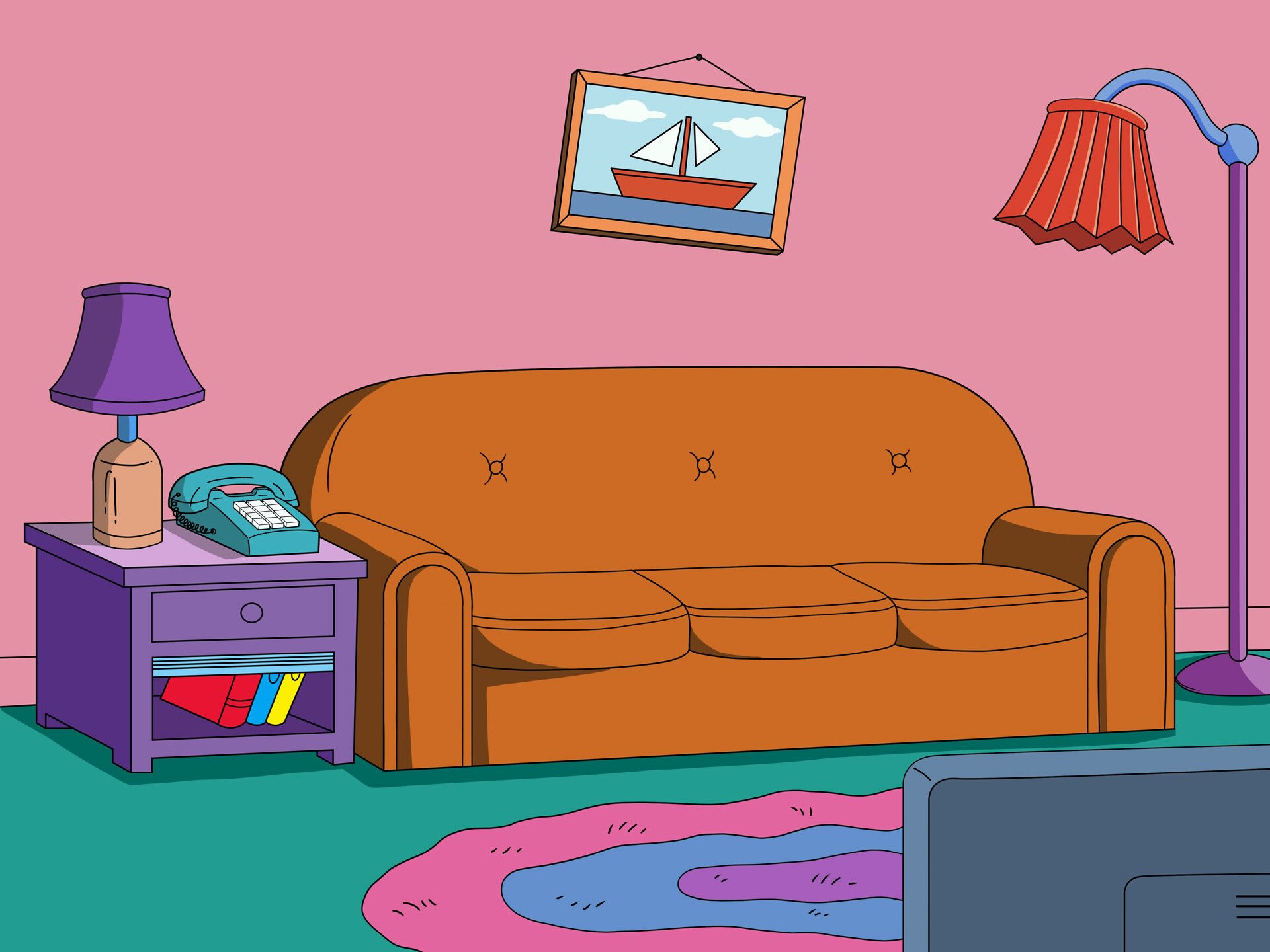
REST3D · Ours — Simpson Room, one input image, one simulator. Clips are the official project-page comparison videos.
Open the official clip directly| Dataset | Method | Failure Rate | Collision Rate | Stable Rate | Position Drift | Linear Velocity | Angular Velocity |
|---|---|---|---|---|---|---|---|
| Replica | REST3D / Ours | 0.0% | 0.0% | 95.8% | 0.094 m | 0.152 m/s | 0.557 rad/s |
| ScanNet++ | REST3D / Ours | 0.0% | 5.9% | 93.6% | 0.080 m | 0.159 m/s | 1.039 rad/s |
| Custom | REST3D / Ours | 0.0% | 1.2% | 95.5% | 0.017 m | 0.140 m/s | 0.468 rad/s |
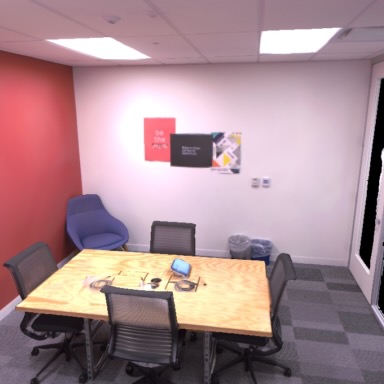
A synthetic dataset with ground-truth scene meshes, used for physical metrics and geometric metrics.

A real-world dataset covering scenes such as meeting rooms, classrooms, and offices.

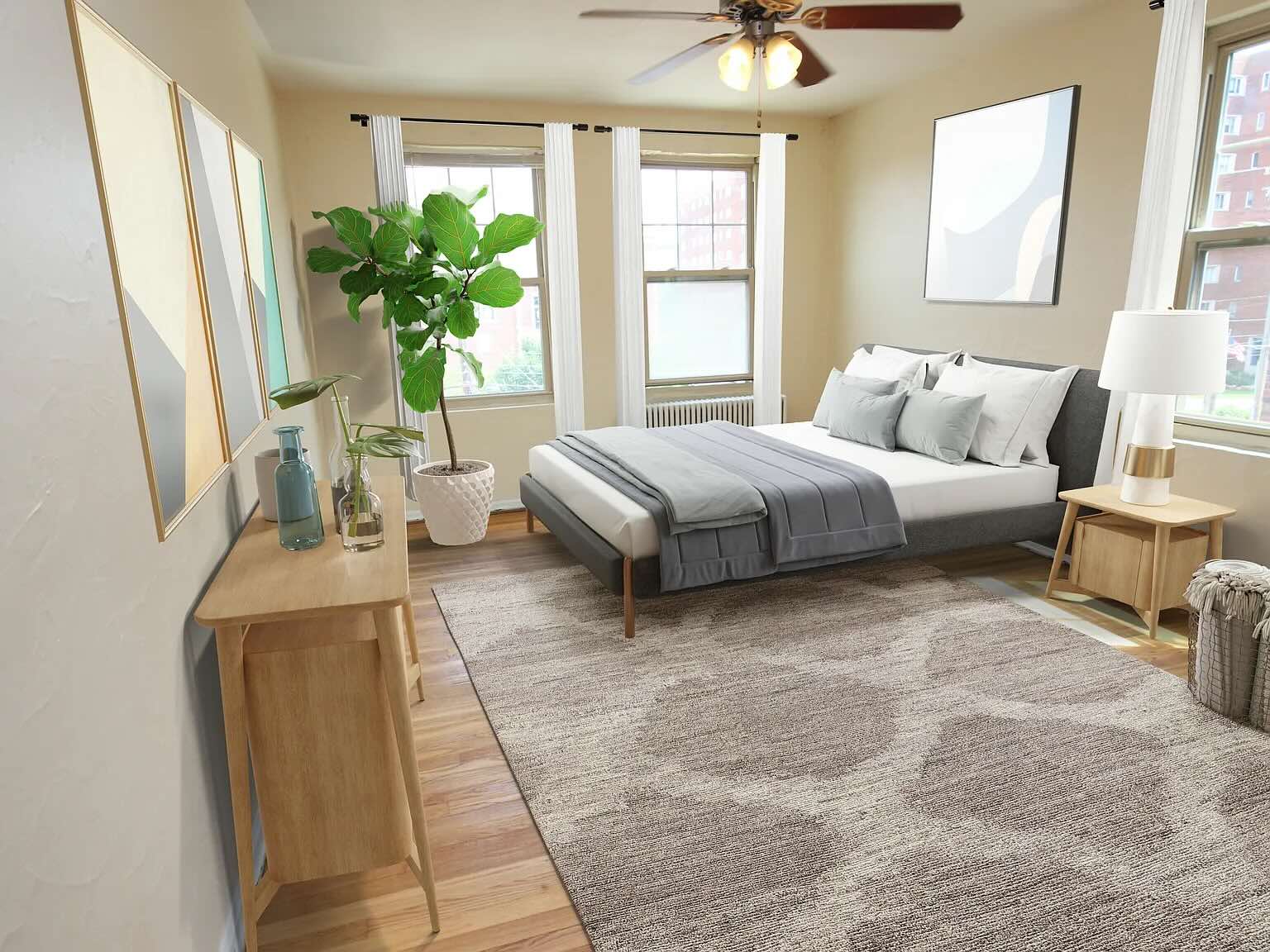
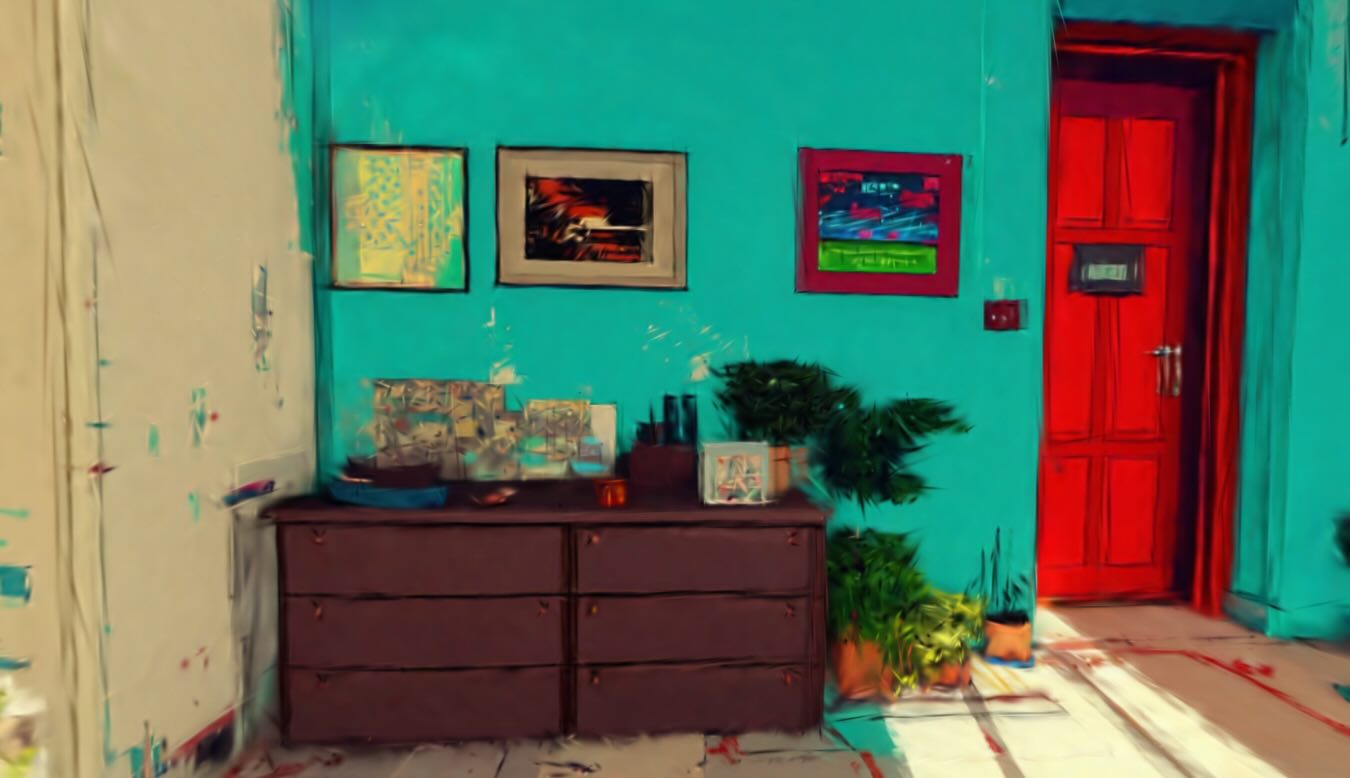
A harder set including bedrooms, living rooms, and cartoon-style scenes to test REST3D robustness.
Failure rate, collision rate, stability rate, position drift, peak linear velocity, and peak angular velocity.
Chamfer Distance, [email protected], and B-IoU are used when ground-truth meshes exist.
Replica and ScanNet++ reconstructions are aligned to ground truth with ICP before geometric evaluation.
DigitalCousins-style approaches can improve physical plausibility by retrieving and assembling 3D assets, but retrieval can be constrained by the asset database and may yield mismatched objects. REST3D instead uses image-to-3D priors and physics-constrained refinement to preserve visual consistency while reducing physical errors.
Gen3DSR is a strong single-view 3D scene reconstruction baseline. REST3D compares to Gen3DSR and focuses on the failure mode that matters in simulation: a scene can be reconstructed but still physically unstable under gravity.
SceneGen-style methods synthesize multiple 3D assets and positions from a single scene image. REST3D argues that generation priors can be physically plausible yet inaccurate relative to the input. REST3D is framed as reconstruction: match the image and obey physics.
SAM3D can recover high-fidelity individual objects, but scene-level reconstruction also needs global orientation, wall attachment, support, collision handling, and stable contacts. REST3D explicitly focuses on those scene-level physical constraints.
REST3D can become a reference point for converting casual images into stable, editable, simulation-ready scenes for immersive production.
REST3D gives researchers a focused entry point for physical scene understanding, image-to-3D, scene generation, and evaluation under simulation.
REST3D matters to robotics because stable object contacts and plausible support relationships are necessary for manipulation and policy training environments.
arXiv, abstract, citation, BibTeX, author links, project page, publication status, and release notes.
Interactive 3D, Play, Reset, Speed, synchronized method comparison, high-resolution videos, and VR demos.
GitHub repository, code status, datasets, baselines, metrics, implementation details, limitations, and future work.
REST3D, REST3D.org, REST3D paper, REST3D arXiv, REST3D code, REST3D GitHub, REST3D demo, REST3D citation.
REST3D reconstructing physically stable 3D scenes from a single image; REST3D single RGB image to simulation-ready 3D assets; REST3D physics-constrained optimization; REST3D scene-tree construction.
single image 3D reconstruction, physically plausible 3D scene, Isaac Gym 3D simulation, VR human-object interaction, DigitalCousins, Gen3DSR, SceneGen, SAM3D, object penetration, object floating.
The REST3D audience expects a technical research interface, not a lifestyle landing page. This design uses Google Material Design 3 tokens (--md-sys-color-*) for all colors, M3 surface container hierarchy for depth, primary for interactive elements, tertiary for AI cues, and error/success/warning for semantic status. The page includes light/dark theme toggle, forced-colors support, and high-contrast text conforming to WCAG AAA standards for vision accessibility.
#D0BCFF (dark) / #6750A4 (light) for REST3D interactive highlights, links, and CTAs.
M3 container-lowest, low, container, high, highest — luminance stepping for depth.
#EFB8C8 (dark) / #7D5260 (light) for AI and generation accents.
Success #81C784, Warning #FFD54F, Error #F2B8B5 — WCAG AAA compliant.
REST3D relies on the robustness of vision-language models for physical scene understanding and may fail in challenging cases. The current REST3D paper focuses on rigid objects and does not explicitly model deformable or non-rigid objects, leaving those cases for future work.
@article{ma2026rest3d,
  title     = {REST3D: Reconstructing Physically Stable 3D Scenes from a Single Image},
  author    = {Ma, Xiaoxuan and Wang, Jiashun and Ugrinovic, Nicol'{a}s and Litman, Yehonathan and Kitani, Kris},
  booktitle = {arXiv preprint arXiv:2605.30338},
  year      = {2026}
}
The authors would like to thank Yuxuan Kuang, Yufei Wang, and Maxwell Jones for their insightful discussions.
REST3D is a single-image reconstruction framework that reconstructs physically stable 3D scenes by integrating physical scene understanding with physics-constrained refinement.
REST3D expands as REconstructing physically STable 3D scenes.
REST3D focuses on scene-level physical plausibility: support relations, collision reduction, stability under gravity, and simulation-ready behavior.
Yes. The official REST3D GitHub repository released the code in 2026.06, and its README documents installation, single-image inference, scene stabilization, and simulator replay. The paper was accepted to SIGGRAPH Asia 2026.
REST3D compares against DigitalCousins, Gen3DSR, SceneGen, and SAM3D.
REST3D evaluates on Replica, ScanNet++, and a Custom set with casual images including bedrooms, living rooms, and cartoon-style scenes.
REST3D is relevant to immersive interaction, content creation, gaming, simulation-ready assets, robotics, embodied AI, real-to-sim, and VR human-object interaction.
A support-relation structure that represents which objects are on, hanging from, or attached to other objects or surfaces.
Simulation-based refinement that moves object poses toward stable, low-collision configurations while preserving the input layout.
A physical plausibility metric indicating whether reconstructed scenes settle into stable states under simulation.
Official REST3D project page with interactive 3D, results, VR demos, comparison, citation, and acknowledgements.
REST3D GitHub repository. Code released 2026.06; paper accepted to SIGGRAPH Asia 2026.
REST3D.org is an independent research resource maintained to help researchers, creators, and builders understand and use REST3D: Reconstructing Physically Stable 3D Scenes from a Single Image. This site links to the public paper, project page, and GitHub repository and preserves author attribution.
REST3D was developed by Xiaoxuan Ma, Jiashun Wang, Nicolás Ugrinovic, Yehonathan Litman, and Kris Kitani at Carnegie Mellon University.
For research questions about the REST3D paper, contact the authors via the official channels listed on the project page.
For issues with REST3D.org (broken links, content suggestions, SEO feedback), reach out via [email protected] or open an issue on the official GitHub repository.